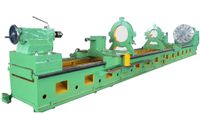
Special Purpose Machines are, by definition, custom. No two are exactly alike because no two manufacturing problems are exactly alike. Designing an SPM requires not just mechanical and hydraulic engineering expertise, but a deep understanding of the customer's production process, quality requirements, and operational context.
Understanding the Problem Before Designing the Solution
The most critical phase of any SPM project is the front-end consultation. Before a single drawing is created, our engineering team spends time understanding the production environment: cycle time targets, material characteristics, operator skill levels, available floor space, and integration with existing production lines. Many SPM failures trace back to insufficient problem definition at this stage.
Modular Design Philosophy
Good SPM design is modular. By building machines around standardized sub-assemblies — hydraulic power units, actuator modules, control cabinets — we reduce lead times, improve maintainability, and give customers flexibility for future process changes. A machine that can be partially reconfigured is worth more than one that must be completely replaced when production needs evolve.
Controls Integration
Modern SPMs are not standalone machines — they are nodes in a production network. PLC-based controls with Ethernet/IP or Modbus communication, touch-screen HMI panels, and data logging capabilities allow SPMs to integrate with SCADA systems and MES platforms. Designing the control architecture is as important as the mechanical design.
Validation and Ramp-Up
Before dispatch, every SPM undergoes factory acceptance testing (FAT) at our facility. We run full production-rate cycles using actual or surrogate materials, measure output dimensions, and validate cycle times. This FAT process catches 90%+ of issues before they reach the customer's floor, dramatically reducing on-site commissioning time.
Lifetime Support
An SPM relationship doesn't end at commissioning. Our team provides operator training, preventive maintenance schedules, and a spare parts inventory tailored to each machine. For SPMs operating in continuous production, we offer annual health checks and performance optimization reviews.