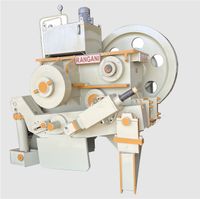
Ring rolling is a specialized metal forming process used to produce seamless rings for applications ranging from aerospace bearings to wind turbine towers. Unlike cut-and-welded rings, rolled rings offer superior grain structure, mechanical strength, and dimensional accuracy — making them the preferred choice for critical applications.
How Ring Rolling Works
In the ring rolling process, a pre-shaped donut (called a preform) is placed between a drive roll and a idler roll. As the drive roll rotates, it reduces the wall thickness and increases the ring's diameter. A mandrel applies additional force from inside. The result is a seamless ring formed under controlled pressure and temperature.
Advantages Over Alternative Methods
- Superior mechanical properties: Continuous grain flow around the ring circumference produces higher fatigue resistance
- Material savings: Near-net-shape forming reduces machining waste by 20-40% compared to machined forgings
- Cost efficiency: Single-setup forming replaces multiple machining operations
- Versatility: Same machine can produce rings ranging from 200mm to 2,500mm diameter
Key Specifications to Evaluate
When selecting a ring rolling machine, critical parameters include maximum ring diameter, wall thickness range, axial thrust capacity, drive motor power, and control system precision. Rangani's ring rolling machines are engineered for India's growing aerospace, defense, and industrial bearing sectors, with PLC-based controls for repeatable quality across production runs.
Applications Across Industries
The ring rolling process serves a diverse range of industries: aerospace (turbine rings, landing gear components), oil and gas (flanges, valve bodies), power generation (wind turbine hub rings), and heavy industry (slewing bearings, gear blanks). Each application has its own requirements for ring dimensions, material grade, and surface finish.